How Should We Then and Now: Ep. 6 (The Scientific Age)

This is the sixth regular installment in a series of posts as I rewatch a 1977 documentary film called How Should We Then Live? If youโ€™re reading this series for the first time, it’s best to start with the project introduction. Todayโ€™s episode is โ€œThe Scientific Age.โ€


In the later parts of this week’s episode of How Should We Then Live, things start to get a little weird.

Francis Schaeffer’s main tasks in “The Scientific Age” seem straightforward if you’re familiar with the work of other evangelical intellectuals. First, Schaeffer seeks to show that Christianity is fully compatible with modern science. (Indeed, he wants to show that Christianity contributed to it.) But he also wants to show that the uncritical embrace of science and technology can erode fundamental human values.

This is not an unusual pair of claims. Philosophers and historians have advanced these claims, or something close to them, for generations. They’re countering a 19th-century notion, the “Conflict Thesis,” which says there is a fundamental opposition between religious and scientific thinking.

The Conflict Thesis is still widely believed in America today, and it has high-profile proponents among science communicators. But most contemporary historians have little patience for it. The Conflict Thesis requires an ahistorical view of both science and religion. To a historian’s eyes, science and religion are complex human activities unfolding in time like everything else humans do.

So this episode presents a great opportunity for Francis Schaeffer to be basically on the same side as historians in a contentious public debate.

But Schaeffer doesn’t stop there. After addressing Christianity’s role in the Scientific Revolution of the early modern age, he moves ahead to the 1970s and beyond, speculating about the future of human reproduction and other questions of bioethics. That’s where things get weird.

In that later part of this episode, I think, we get another strong taste of the cultural anxieties that brought Francis Schaeffer, our rehabilitated 1950s fundamentalist living in Switzerland, back into American political conservative activism. So later in this post, I’m going to dive back into the political context of Schaeffer’s work on this film in the 1970s.

Specifically, I’m going to talk about the time Francis Schaeffer got a late-night White House tour from Gerald Fordโ€”after which he ended up sitting in the Lincoln Bedroom, telling the president’s son and daughter-in-law his plans for filming How Should We Then Live.

Continue reading “How Should We Then and Now: Ep. 6 (The Scientific Age)”
Hilary Mantel’s Lectures on Historical Fiction

Hilary Mantel in 2010 (photograph by Chris Boland | CC BY-NC-ND 2.0)

Four years ago, the novelist responsible for Wolf Hall and other acclaimed works of historical fiction delivered a series of five public lectures for the BBC. Collectively entitled “Resurrection: The Art and Craft,” Hilary Mantel’s 2017 Reith Lectures are still available online.

I think very highly of these addresses, which show great sensitivity to the nature of history as well as literature. Anyone responsible for historical storytellingโ€”in fiction or nonfictionโ€”could benefit from them. But they’re a little difficult to find on the BBC’s website, so I’m arranging direct links here.

  1. The Day Is For the Living, June 13, 2017, Manchester (transcript PDF): “Memory, mourning, and how the stories we tell ourselves shape our view of the pastโ€”and what happens on the threshold when private and public history meet.”
  2. The Iron Maiden, June 20, 2017, London (transcript PDF): “How does fact pass so readily into legend? Do we use the past as a mirror, and prefer a version that flatters us?”
  3. Silence Grips the Town, June 27, 2017, Antwerp (transcript PDF): “The story of a Polish writer whose efforts to work history into fiction were so intense that they consumed and killed her. Was she a martyr to history? Or just wrongheaded?”
  4. Can These Bones Live?, July 4, 2017, Exeter (transcript PDF): “The task of the historical novelist is to balance the claims of fact against the power of invention. It’s a balance that must be kept phrase by phrase [through] craft and technique.”
  5. Adaptation, July 11, 2017, Stratford-upon-Avon (transcript PDF): “Adaptation [for stage and screen] is not a compromise or a betrayal of an original, but an actual necessary and creative act, one we perform every day.”

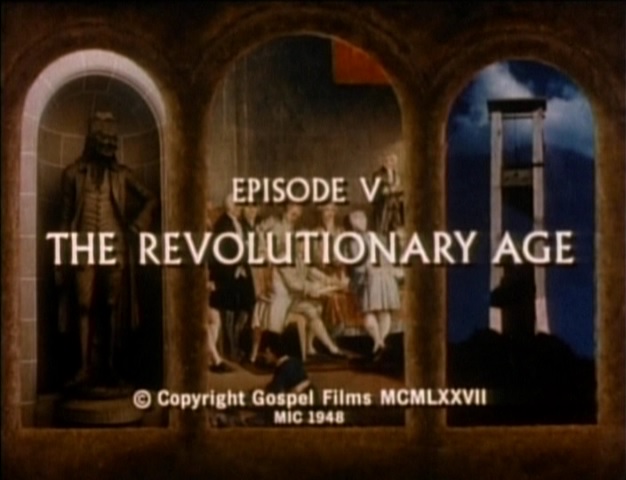
How Should We Then and Now: Ep. 5 (The Revolutionary Age)

This is the fifth regular installment in a series of posts as I rewatch a 1977 documentary film called How Should We Then Live? The series has moved from Thursdays to Saturdays. If youโ€™re reading this series for the first time, I recommend starting with the project introduction. Todayโ€™s episode is โ€œThe Revolutionary Age.โ€


I approach this week’s episode of How Should We Then Live with trepidation. Halfway through his sweeping ten-episode story about “the rise and decline of western thought and culture,” Francis Schaeffer has now arrived at historical territory that I can consider really mine: the early United States. That means the temptation to embark on a detailed fact-checking of his work is going to be strong.

And let me tell you, this episode has some major opportunities for fact-checking.

But the larger problems with Schaeffer’s story are already familiar. In “The Revolutionary Age,” Schaeffer continues to compress and stretch time according to the needs of his argument. He crowds complex experiences under simple labels. He passes reductive judgments on entire societies and civilizations. He shows little interest in historical study as such; he embraces it just to the extent that it serves his evangelistic or political purpose. And he seems determined to see the best in the past people he identifies with his own evangelical Protestant faith, and the worst in those he doesn’t.

Unfortunately, while sharing its basic flaws with the previous episodes, “The Revolutionary Age” lacks their crucial redeeming element: It does little to cultivate appreciation for the visual art, music, and other cultural monuments of the societies it discusses. As this series moves into the modern age, I’m worried that Schaeffer is losing interest in ushering his viewers into the bygone social world.


Continue reading “How Should We Then and Now: Ep. 5 (The Revolutionary Age)”

Red or Blue, Your State’s History Standards Probably Aren’t Great, a Review Says

The Thomas B. Fordham Institute, an education advocacy organization that promotes charter schools, has released a report called The State of State Standards for Civics and U.S. History in 2021.

This review concludes that a bipartisan mix of governmentsโ€”Alabama, California, Massachusetts, Tennessee, and Washington, D.C.โ€”have state-level standards for American history and civics that excel in “content, rigor, clarity, and organization.” At the other end of the grade curve, the report gives its lowest marks to a red-blue mix of ten states: Alaska, Delaware, Illinois, Maine, Montana, New Hampshire, Pennsylvania, Vermont, Wisconsin, and Wyoming.

I’ve read enough to say it’s an interesting document. I don’t share Fordham’s views on “school choice,” but so far, I don’t see any reason for that to affect my assessment of the report. I’m skeptical of the notion that it’s possible to assign a meaningful grade or linear ranking to a state’s standards, but then again, I know how disseminating a report through news media works.

My primary problem with its approachโ€”again, so farโ€”is that I don’t share the authors’ faith that specificity in state history standards is always a good thing. In this respect, I tend to agree with the criticism of the external advisor Meira Levinson (Harvard GSE), who comments on page 11 that “there is just too long a history of teachers’ treating packed knowledge standards as content to be marched through.” On the other hand, I tend to side with the authors, rather than Levinson, on (for example) the importance of chronological organization.

And I deeply appreciate other aspects of the report. For example, it advocates a strong emphasis on U.S. (and other) history throughout K-12 education, calling out state standards that relegate history courses to a small part of a student’s career.

The full document is almost 400 pages long, with assessments of the history and civics standards in every state, so it’s bound to include plenty of observations and claims that teachers of any background can argue over. What I appreciate most is that such debate is likely to be both possible and rewarding. This kind of review is difficult to do in a fair-minded way, especially at the present moment. There’s a lot of material here that seems good for thinking with.

You can read more about the review in Cory Turner’s story for NPR.

Colleges Are Mostly Supportive Toward Evangelicals, Say InterVarsity Members (UPDATED)

If you’ve followed this site long, you know I have a particular interest in addressing the popular notion that U.S. higher education is a hostile environment for conservative studentsโ€”including students with conservative religious commitments.

Last week, a major evangelical Christian campus ministry, InterVarsity Christian Fellowship, released the results of a member survey conducted online for its PR firm, Pinkston, between May 3 and June 3. All eleven questions in the survey (PDF) may be interesting to college educators.

For my purposes here, the most interesting is Question 8: “How would you describe your college campus’s attitude toward Evangelical Christians?” Among the 316 students (from 127 campuses) who responded, the consensus was that college is a good environment for evangelicals.

More than a third said their college is either “extremely” or “very welcoming and supportive”; and an equal number said their college is “moderately welcoming and supportive.” Fewer than five percent said their college is “not at all welcoming and supportive”:


Now, it’s probably important not to overinterpret these results. The sample size was small, representing a tiny fraction of InterVarsity’s membership and just 17% of the college campuses where InterVarsity has chapters.

More importantly, it isn’t clear what kinds of colleges appeared in the sample. This ministry has representatives at religious institutions as well as secular colleges and universities. That could obviously affect whether students felt they were in a welcoming environment. It’s also possible that different students have completely different kinds of criteria in mind for feeling supported on campus. (I would especially like to know more about the 20% who say they feel “slightly” welcome.) And there’s always the question whether respondents’ campus experiences, positive or negative, have been defined primarily by administrators, by faculty members, or by other students.

Christian Universities6
Secular Universities116
Private Universities40
Public Universities85
Community/Junior Colleges10

(UPDATE: Elizabeth Chung, an account coordinator at Pinkston, has very kindly supplied me with a basic breakdown of the types of colleges represented in the survey responses. I’m not sure exactly how these categories overlap; for the purposes of this post, the crucial facts are that only a handful [6] of the campuses were Christian universities, and most [85] were public universities.)

It’s also very likely that the respondentsโ€”for whatever reasonโ€”are less politically conservative, on average, than white* American evangelicals generally are. This could play a role in their sense of comfort on campus. When asked what social issues are most important to them (Question 11), the greatest number of respondents (39%) named racial justice as one of their top three issues; the next highest number named climate change. Reducing abortion was fourth on the list of responses, named by just over one quarter of students as one of their top three interests.

(* Most respondents were white [62%] or Asian American [18%]. Almost two thirds [65%] were women.)

Nevertheless, the data we have are the data we have. However far they go, we can tally this survey as the latest of many pieces of evidence that American higher education is generally not the hostile environment many conservative religious students are told to expect.

How Should We Then and Now: Ep. 4 (The Reformation)

Following a hiatus for summer travel, this is the fourth regular installment in a series of posts as I rewatch a 1977 documentary film called How Should We Then Live? The series has moved from Thursdays to Saturdays. If youโ€™re reading this series for the first time, I recommend starting with the project introduction. Todayโ€™s episode is โ€œThe Reformation.โ€


So far in this series, we’ve seen Francis Schaeffer reduce the experiences of whole civilizations to a set of simple patterns in order to attack their worldviewsโ€”presenting them as negative object lessons for 20th-century audiences, especially in the United States. The Roman empire, Schaeffer said, was hideously cruel and ultimately collapsed because it was polytheistic and therefore pluralistic. For the same reason, he said, Rome was unable to tolerate Christianity, its eventual Christianization notwithstanding. Then Medieval Europe, he said, disastrously abandoned the authority of the Christian Bible for “humanistic” reason, despite (or because of) the problematic authority of the Catholic church; the Renaissance continued that process, “opening the door” for 20th-century relativism.

In each case, Schaeffer’s view of his subject has been deliberately negative. In going negative, he sometimes seems to be struggling against his own obvious appreciation for the art, architecture, and other lasting accomplishments of the societies he halfheartedly attacks.

But with this week’s episode, on the Protestant Reformation, Schaeffer suddenly inverts this approach. He is still forcing a lot of varied European history into a predetermined pattern, presenting a complex intellectual and social revolution as a half-hour object lesson for modern audiences. But now he makes European Protestantism play the role of a cultural hero, dismissing its flaws, rather than its virtues, as aberrations.

Perhaps that is part of the reason this episode draws so much from a 1953 movie.

Filmed in West Germany by the Jewish director Irving Pichel (a victim of the Hollywood blacklist), the Oscar-nominated Martin Luther had been commissioned by American Lutherans and written by a team that included the distinguished church historians Theodore G. Tappert and Jaroslav Pelikan. The title role was filled by Niall MacGinnis, an experienced and charismatic Irish-British character actor.

Scenes from this biopic are scattered throughout the fourth episode of How Should We Then Live. (Martin Luther also influenced the episode on the Middle Ages, which includes a dramatic reenactment that clearly plagiarizes a shot in the movie.) I find these excerpts enjoyable, and I think they enhance the episode. In fact, I also rather like the full movie, though most viewers, including critical historians, will find it very dated.

But one reason these scenes are here is that only a hero-worshiping, great-man-centered view of the Reformation can easily sustain the story Schaeffer wants to tell. Apart from Luther’s greatness and (presumably) divine providence, How Should We Then Live just doesn’t seem to have any clear historical sense of where the Reformation came from.


Continue reading “How Should We Then and Now: Ep. 4 (The Reformation)”

“Clear-Eyed, Nuanced, and Frank”

This morning, dozens of scholarly and educational organizations in the United Statesโ€”including PEN America, the American Historical Association, the American Association of University Professors, the Association of American Colleges and Universities, and the American Federation of Teachersโ€”have signed a joint statement condemning broadly-worded bills that aim to curtail discussions of racism and history in schools and colleges.

First, these bills risk infringing on the right of faculty to teach and of students to learn. The clear goal of these efforts is to suppress teaching and learning about the role of racism in the history of the United States. Purportedly, any examination of racism in this country’s classrooms might cause some students ‘discomfort’ because it is an uncomfortable and complicated subject. But the ideal of informed citizenship necessitates an educated public. Educators must provide an accurate view of the past in order to better prepare students for community participation and robust civic engagement. Suppressing or watering down discussion of ‘divisive concepts’ in educational institutions deprives students of opportunities to discuss and foster solutions to social division and injustice. Legislation cannot erase ‘concepts’ or history; it can, however, diminish educators’ ability to help students address facts in an honest and open environment capable of nourishing intellectual exploration. Educators owe students a clear-eyed, nuanced, and frank delivery of history so that they can learn, grow, and confront the issues of the day, not hew to some state-ordered ideology.

โ€”Joint Statement on Legislative Efforts to Restrict Education about Racism and American History, June 16, 2021

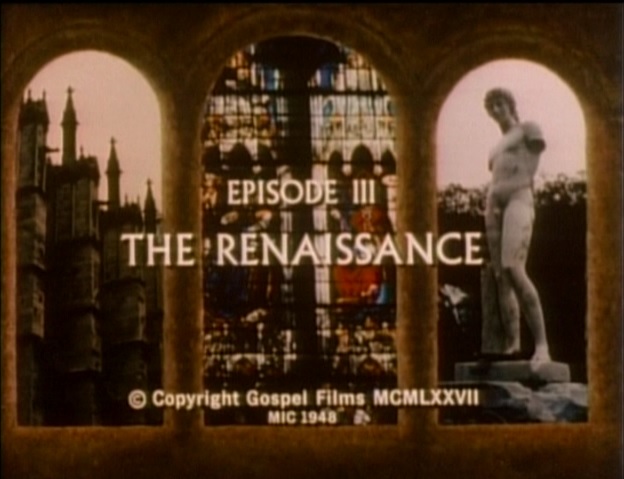
How Should We Then and Now: Ep. 3 (The Renaissance)

This is the third regular installment in a series of posts as I rewatch a 1977 documentary film called How Should We Then Live? If youโ€™re reading this series for the first time, I recommend starting with the project introduction. Todayโ€™s episode is โ€œThe Renaissance.โ€


This week’s episode of How Should We Then Live is even more ambivalent about its subject than the episode on medieval Europe was.

It’s also, I would say, less focused on history as such. That is, today’s episode is more an interpretation of art history, which is its own academic discipline. But Francis Schaeffer is still making claims about Europe’s intellectual and cultural evolution. He is using the art of the Renaissance to support his overall argument that we must base our social life on a foundation of Protestant Christian values if we want to preserve both order and freedom.

I would say this episode seriously taxes Schaeffer’s approach. For him, the Renaissance, like the medieval period, is just too likable to work well for his argument. Intellectually, he needs the Renaissance to show signs of decay, or at least the causes of decayโ€”signs that Europe was slipping toward the despair that he associates with post-Christian modernity. His argument needs the Christian humanism of the Renaissance to prefigure the secular humanism that Schaeffer finds so threatening in the 20th century.

Yet in this episode, we see Schaeffer, a sort of evangelical dissident from mid-20th-century fundamentalism, absolutely revel in Renaissance culture. His enthusiasm, however much it may be mixed with skepticism, is infectious.

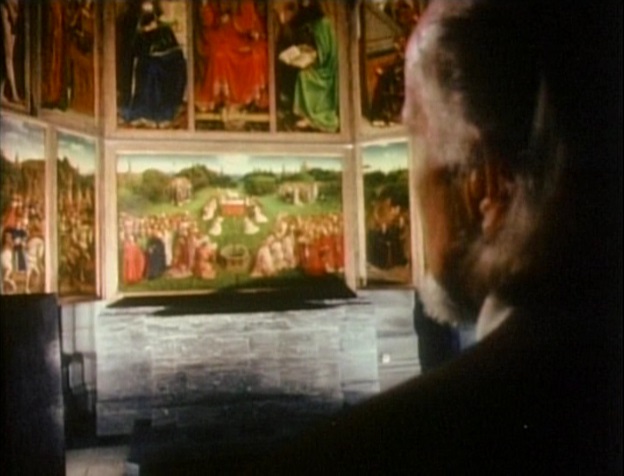
The other thing today’s viewers will find extraordinary about this episode is the absurd level of access Schaeffer’s crew had to some of the masterworks of European art.


Continue reading “How Should We Then and Now: Ep. 3 (The Renaissance)”

The Conspiracy Theorist in Your Class

This week, the historian Elizabeth Stice warned readers of Inside Higher Ed that college professors in the United States may face a rising number of undergraduates who believe in conspiracy theoriesโ€”including the kinds of toxic conspiracy theories that drive anti-Jewish and anti-Asian violence.

Stice issues a challenge to instructors:

The situation is further complicated today, because many people are already skeptical and suspicious of higher education. Those who doubt ‘experts’ are unlikely to be easily convinced and will be wary of being ‘brainwashed’ in other directions. โ€ฆ

We stand at a crossroads. How will colleges and universities counter the rise of conspiracy thinking that compulsively creates internal enemies and distorts reality? How will we do it in ways that are compelling and convincing? The battle is not for attaining the moral high ground but for expanding minds. โ€ฆ What is our plan?

Unsurprisingly, considering her role as a history professor, Stice writes that the liberal arts disciplines have a particularly important role to play in promoting reality-based thinking among students.

I would like to use this opportunity, though, to argue (again) that it’s not simply liberal arts courses that have a critical role to play hereโ€”and not only at the undergraduate level. What matters is the comprehensive model of a liberal arts education as a cultivation of the student’s entire imagination, starting early.

I’m convinced that any individual course is as likely to stoke conspiracy theories as to alleviate them. That’s because conspiracy theories happen, for the most part, as a result of inquisitive and articulate people dealing with partial information about how the world works.

This is one of my concerns about recent controversies in both K-12 and higher education. Often American political and academic leaders seem fixated on certain kinds of coursesโ€”for example, on the first-year courses that colleges sometimes require on the topic of diversityโ€”or certain academic theories that may or may not be taught at allโ€”while adopting rhetoric that undermines public confidence not in those specific things, but rather in the very concept of an education that happens holistically across many different disciplines.

And many academics in the classroom, for their part, seem fixated on addressing such problems by doubling down on expertise, promising to teach specialized skills of research and analysis, as if better research skills would solve the problems that arise when Americans “do their own research” in the absence of a well-rounded understanding of how the world works.

Meanwhile, some pundits confuse a failure to offer a diverse education (covering many different approaches, concerns, disciplinary tools, and debates) with the individual instructor’s or specific discipline’s supposed failure to permit “viewpoint diversity” in the classroomโ€”as if a content-neutral concept of viewpoint diversity weren’t tailor-made for conspiracy theorists and other defectors from reality.

But what can any teacher do about this problem? How can a huge institutional and policy problem be addressed in my classroom?

For a history teacher, I think one answer is to go big and small at the same time. We need to introduce students to the bigness of the pastโ€”its variety, its complexity, the inherent insufficiency of any single interpretationโ€”while also showing students that the past is about real people’s lives, not about abstractions.

How Should We Then and Now: Ep. 2 (The Middle Ages)

This is the second regular installment in a series of posts as I rewatch a 1977 documentary film called How Should We Then Live? If you’re just starting out, I recommend starting with the project introduction and reading the posts in order. They really will make more sense that way. Today’s episode is “The Middle Ages.”


It occurred to me only after I published last week’s post that it could shed light on a key incident in last summer’s Black Lives Matter protests.

A year ago this week, police officers in Washington, D.C., invaded the grounds of an Episcopal church near the White House and tear-gassed protesters and clergy members who had gathered there. As you’ll recall, the U.S. attorney general ordered [update: or re-ordered] the attack just before Donald Trump held an awkward photo-op in front of the church, displaying someone else’s Bible as if he were a child at show-and-tell.

Some evangelical Protestants praised this assault. “Thank you[,] President Trump,” wrote Billy Graham’s son; “God and His Word are the only hope for our nation.” The president of the National Hispanic Christian Leadership Conference fawned over Trump for brandishing the Bible on camera “like a boss.” And a minor politician in Florida recalled thinking “Look at my president! He’s establishing the Lord’s kingdom in the world.”

Perhaps, I’m saying, such odd reactions shouldn’t have been surprising, in light of the episode I watched last week. The very first minutes (and the promotional materials) of Francis Schaeffer’s How Should We Then Live had put fear of urban disorder at the heart of its message to evangelicals. Judging by the stock footage involved, this had included a specific fear of Black protesters.

Of course, a lot has happened in American evangelicalism since 1977. Much more recent developments were more important to what transpired last summer. But I think it would be a mistake to discount the significance of the message Francis Schaeffer delivered in that early transitional moment.

If I’m right, then the second episode of How Should We Then Live, which I watched this week, continues to provide some distant backstory for last summer’s attack. Specifically, it may help explain some of the conditions that led to evangelical leaders in 2020 praising the use of a Bible as a symbol of violent secular political power.

Why a Bible, in particular? It’s an odd thing to see in this context, when you think about it.

Ostensibly, today’s episode, “The Middle Ages,” covers about one thousand years of western European religious history. But what it was really about, I’m going to argue, is the role that the Bible should play in American churches and public life.

In this respect, Episode II of How Should We Then Live speaks both to politics in the 1970s and to a specific theological debate that was then raging inside American evangelicalism.


But first, let me acknowledge what a delicate task this episode must have been for Francis Schaeffer to undertake at the time. This is a respect in which U.S. evangelicalism has changed considerably in the last five decades.

Continue reading “How Should We Then and Now: Ep. 2 (The Middle Ages)”