Another Theme for Spring: Presence

Surveying the smoldering ruins of academic Twitter this week, one thing I observed several times (not that this is anything new) is that pedagogical main-character-of-the-day controversies—e.g., a controversy this week over whether it’s ableist for a professor to refuse to distribute a full course syllabus before the first day of class—rarely seem to be examples of useful good-faith disagreement about actual teaching practices in a complex emergent environment. These controversies tend instead to feed on sloganeering and hyperbole. They exemplify mainly how people want to be seen publicly as teachers by other academics who will never know anything about their real-life teaching or its results.

Artist’s impression of a collection of academics examining each other’s tweets for signs of carceral pedagogy

Last week, I wrote briefly about my struggle to identify potential adjustments to my teaching approach that might best help several dozen specific students during the new spring semester. Well, as of yesterday, all my in-person classes now have had their first meeting, and based on those meetings, I’m optimistic that my changes will be effective—on balance. But I have no illusions about it being easy to implement these changes well.

Above all, what’s going to be necessary is that I put in the work of responding creatively, week after week, to the needs of the students who are actually in the room—including, by the way, needs that may well be contradictory. Such contradictions are typical in a real-life classroom, not exceptional.

So in addition to seeking simplicity this semester, as I wrote last week, I’m also seeking a greater sense of presence. I’m trying to be better at adapting to what’s actually happening for my students—specific people in a specific time and place—rather than adhering to what I had planned or to any abstract ideological prescription somebody tries to impose on others’ classrooms. And, to some extent, I hope my students will be able to see that this is what’s happening.
Week Links in Education: Jan. 14

Stories and essays, particularly related to education in the United States, that caught my attention this week. A 🕛 symbol indicates a known metered paywall.


Quinta Brunson’s ABC sitcom Abbott Elementary, set in a Philadelphia elementary school, won the award for best comedy series (among other honors) at the 2023 Golden Globes.

Seattle Public Schools sued the parent companies of TikTok, Instagram, Facebook, YouTube and Snapchat for creating a public nuisance.

At age 33, the TikTok literary celebrity Oliver James started preparing for fatherhood by learning 🕛 to read.

The Muslim Public Affairs Council issued a statement supporting the adjunct art history instructor who was fired by Hamline University for showing students a Muslim artist’s painting of the Prophet Muhammad.

The Institute for Fiscal Studies said the annual real wages of experienced teachers in England have declined by £6,600, or 13%, since 2010.

British schools are trying to counteract the influence of Andrew Tate, the celebrity misogynist who is currently jailed in Romania on sex crimes charges.

Keenan Anderson, a 31-year-old high school English teacher who was related to the Black Lives Matter co-founder Patrisse Cullors, died after being held down and repeatedly tased by Los Angeles police officers after a traffic collision.

The Florida governor has appointed 🕛 six conservative ideologues as trustees of New College of Florida, aiming, according to his chief of staff, to remake the public liberal arts college in the image of an influential Christian school.

(For more on NCF, see my earlier post on how a prominent white nationalist was deradicalized there.)

A legal advisor in Donald Trump’s coup attempt has been named 🕛 as the founding dean of High Point University’s new law school. He is currently the dean of the law school at Regent University, another Christian college.

A deputy campaign manager for the mayor of Chicago, Lori Lightfoot, emailed an unknown number of Chicago public school teachers, asking them to encourage their students to volunteer for Lightfoot’s reelection campaign in exchange for class credit.

My Theme for Spring: Simplicity

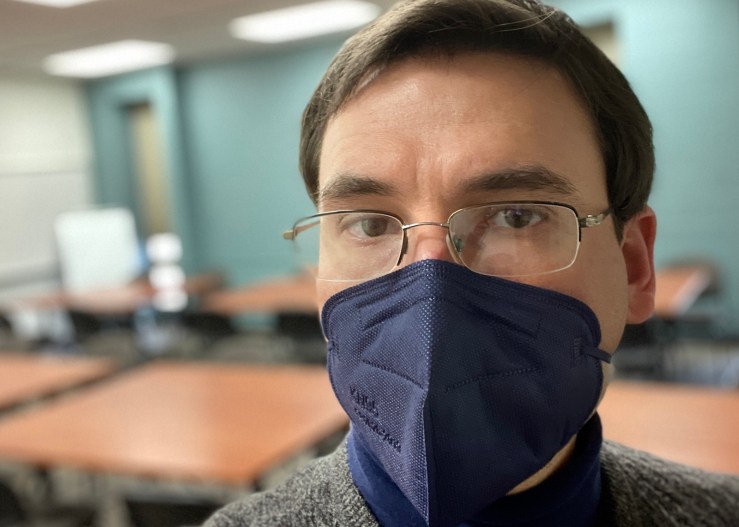
This photograph is from a year ago.

Since the COVID-19 pandemic hit America in early 2020, teachers here have spent each academic term trying to catch up to an evolving disaster. That is, we have carefully planned every term based on what happened during the previous term, only to encounter new problems. Sometimes the new problems resulted from our (necessary) attempts to mitigate the old ones, which is especially annoying.

During these years, every topic that pundits and armchair pundits have treated as the issue confronting American education—remote learning! mask mandates! vaccine mandates! ableism! flexibility! testing! kindness! learning loss! self-censorship!—has turned out to be just one more dimension of a much larger problem, and that problem is that pandemics suck.

Peering into the future, I’m certain of only one thing: We’re going to be dealing with the pandemic’s fallout for years, and it’s a problem much bigger than any teacher’s or institution’s choices, however good or bad those choices may be.

Anyway, here’s my current attempt to fight last semester’s battles: I’m trying to help minimize student anxiety by simplifying my courses, especially at the outset.

For classes that meet in person this spring, I’m getting back to basics with the most predictable weekly schedule I can arrange. I’m drawing up each course calendar in the form of a checklist to maximize transparency and encourage students to track their progress. I’m assuming that class time will mostly be spent on really basic concepts. And I’m stripping down my syllabus, grounding every design choice in the need to make it less intimidating.

To some extent, this is taking me back to my earliest days as an instructor, when I was much more anxious in the classroom. But now simplicity is about helping students in crisis find their footing.

I can’t wait to find out how completely this, too, ends up missing the mark.

Week Links in Education: Jan. 7

Stories and essays, particularly related to education in the United States, that caught my attention this week. A 🕛 symbol indicates a known metered paywall.


The secret to success in college, wrote 🕛 Jonathan Malesic, is almost too obvious to mention.

Professors in Florida, especially scholars who don’t have tenure, talked about the specific chilling effects of that state’s educational gag law, which was enacted in 2022.

The “‘godfather’ of human rights” reportedly was blocked 🕛 from a position at Harvard’s Kennedy School last year for his criticism of Israeli policy.

The man who organized the “Varsity Blues” college admissions scheme was sentenced to three and a half years in prison.

The chair of the history department at Annapolis, Tom McCarthy, explained 🕛 why every student at the U.S. Naval Academy takes at least three history courses.

What is #ReceptioGate, and why does it have medievalists in an uproar on social media? This week, Charlotte Gauthier tried to explain. Peter Burger posted a more detailed account in Dutch.

Many museums have followed the lead of the Museum of Modern Art in developing programs especially for visitors with dementia.

Joan Steidl discussed what it’s like to return to college at 65 years old.

The U.S. Department of Education’s civil rights office received almost 19,000 🕛 discrimination complaints during the last fiscal year, an all-time record.

Curriculum publishers face newly restrictive state laws as they try to develop more inclusive materials.

In Houston, a study of 16,000 students tallied the benefits of making schooling less hellish. Improved access to arts education had no short-term effect on math, reading, or science scores—but did correspond with improvement in student engagement, academic ambition, and disciplinary records.

By the time students arrive in college, their tendency to choose friends and study partners based on ethnic and gender similarity is already engrained.

Postmodern Gradgrindification

In the great pantheon of Charles Dickens characters, one of the lesser lights is Thomas Gradgrind—that’s Mr. Thomas Gradgrind, sir. You may be familiar with him.

In the opening chapters of the Dickens novel Hard Times (1854), Gradgrind operates an experimental school. There, in the polluted northern British industrial city of Coketown, he sees to it that young pupils are trained according to the best principles of modern utilitarianism and empiricism.

Gradgrind’s poor students—typically “poor” in more than one respect—will not waste their time daydreaming. They will be prepared with absolute efficiency to enter the adult middle-class world of the industrial nineteenth century.

Continue reading “Postmodern Gradgrindification”

Week Links in Education: Dec. 31

Stories and essays, particularly related to education in the United States, that caught my attention this week.


The former pope, Benedict XVI, died last night. NPR’s obituary includes an early controversy of his papacy, when Benedict delivered a lecture on faith and reason at the University of Regensburg (where he had worked as a professor) that became a major diplomatic incident.

In Pennsylvania, a Ph.D. student in criminal justice was arrested for the murders of four University of Idaho undergraduates. Meanwhile, a history professor is suing a TikTok tarot reader for falsely accusing her of involvement.

During the pandemic—consistent with existing knowledge that young people are more likely to die by suicide during the school year—local schools’ returning to in-person instruction was associated with increased suicide rates among teenagers.

Seasonality may also account for the mixed evidence about whether teen suicides rose after the release of 13 Reasons Why in the spring of 2017.

In 2014, a policy shift at Wellesley College provided data suggesting that pass/fail grading modestly reduces undergraduates’ effort compared with traditional grading.

No, Stanford University didn’t ban the word American.

Sometime during the last decade, millennials became old. But “millennial cringe” is just as much about changes in the way Internet communities form.

The professional misogynist Andrew Tate, who apparently was arrested this week in Romania on charges of operating a sex-trafficking ring, has an international following among radicalized school-aged boys. A business survey this fall named him the top influencer among U.S. teenagers.

Zahra Joya, who dressed in boys’ clothes to attend school in Afghanistan in the 1990s, lamented the drastic denial of educational freedom under renewed Taliban rule.

When a man in suburban Buffalo broke into a school and raided the kitchen and nurse’s office, he was publicly hailed as a hero.

Do Higher Education’s Leaders Know What Education Is?

As American universities lay off professors and close departments and programs—disproportionately targeting the sciences and humanities, usually on the basis of make-believe profit calculations that reflect no comprehension of how a university actually works—it’s been difficult to maintain faith in those institutions’ leaders. I doubt I’ve been alone as a college teacher wrestling with a sense of betrayal.

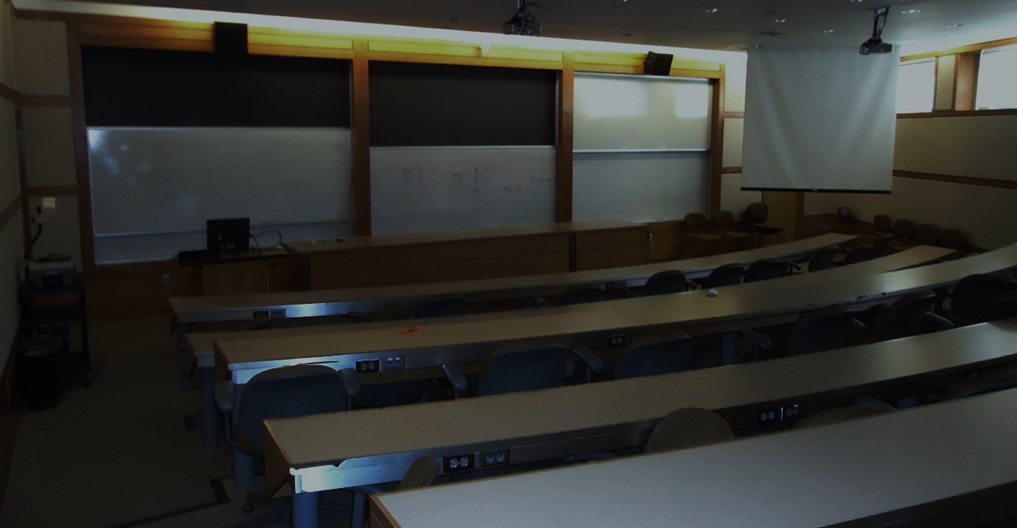
An empty and darkened college classroom

Contrary to what most of us would like to believe, the betrayal we feel is fully bipartisan.

Continue reading “Do Higher Education’s Leaders Know What Education Is?”

“How Many Forgotten Heroes Sleep in History’s Great Cemetery?”

The dead are dead, and it makes no difference to them whether I pay homage to their deeds. But for us, the living, it does mean something. Memory is of no use to the remembered, only to those who remember. We build ourselves with memory and console ourselves with memory.

— Laurent Binet, HHhH, trans. Sam Taylor (New York: Picador, 2013), 179

Week Links in Education: Dec. 24

A supersized Hanukkah-Christmas edition of the stories and essays, particularly related to education in the United States, that caught my attention this week. A 🕛 symbol indicates a known or likely metered paywall.


In a speech at the national archives in The Hague, the Dutch prime minister apologized for his nation’s role in colonial slavery, promising to create a €200 million fund for related research, education, and memorial initiatives.

In west central Illinois, a public school for 65 students with disabilities calls the police every other day. The Garrison School has the highest student arrest rate in the United States.

In Alabama, the superintendent of the Monroe County public schools built a new extension to the school-to-prison pipeline by inviting state prison guards to raid his schools in an unsuccessful search for drugs.

American prisons ban at least 54,000 books.

The prosperity enjoyed by “first-generation locals” in Denmark is determined by parents’ socioeconomic backgrounds more than their immigrant status.

Why is college so expensive? The authors of a forthcoming book summarize 🕛 their findings. Their answer looks back in time a long way.

Free after 23 years in prison for a murder he didn’t commit, Adnan Syed has a job at Georgetown University’s Prisons and Justice Initiative.

Steven Mintz wondered 🕛 what humanities professors should offer their students in an age when they cannot, in good conscience, encourage them to seek a similar career—because that career no longer exists.

As Russia’s attack on Ukraine began, 18-year-old Yevhen Kryvoruchko and his mother took shelter with 300 other people at their local school in Kharkiv, while 🕛 Yarik Slyusar spent his 16th birthday vowing to become a lawyer and take Russia to The Hague.

Bryan Alexander introduced me to the useful term “queen sacrifice” as a metaphor for what happens when desperate colleges and universities try to save themselves by destroying their academic programs and firing their faculty members.

In Afghanistan, after the Taliban banned women from universities, some women protested—risking arrest and beatings—and some male professors and students are reported to have stopped work.

The most isolating years of the COVID-19 pandemic left behind both apathy and atrophied “school muscles” among high schoolers.

There’s no consensus yet on the causes of the teen mental health crisis—but it started long before the pandemic, and everyone in the relevant professions can see it happening.

One part of our recipe for anxiety: Americans grow up like Italians but go away to university like Germans.

Since the University of Montana created the position of tribal outreach specialist in the president’s office in 2018, the university has enjoyed ​​a 24% increase in Native American enrollment.

America’s crisis 🕛 of high-quality child care is only beginning.

On the other hand, things are looking up for the nation’s manufacturers of child-sized coffins.

California State University, Chico, is in turmoil over the university’s lenient treatment of a biologist who has been accused not only of sexual misconduct but also of planning to kill 🕛 his coworkers.

The American Historical Association is conducting 🕛 a comprehensive two-year research project to determine what U.S. secondary students are really being taught about history.

Week Links in Education: Dec. 17

Some of the stories and essays, particularly related to education in the United States, that caught my attention this week.


More than 70 years after starting college, Joyce DeFauw has earned her bachelor’s degree from Northern Illinois University. Her advice to others: “Don’t give up.”

Thousands of high school students, typically at predominantly Black and Hispanic schools, are being enrolled involuntarily in JROTC programs.

Several University of California campuses have been “inexcusably” slow repatriating thousands of Native American remains and artifacts.

Seven former students said they endured sexual harassment by Philip Dybvig, who shared this year’s Nobel Prize for economics. Dybvig’s lawyer said he has been questioned by the Title IX office at Washington University in St. Louis.

College students are back in physical classrooms—but are they really present anymore?

State governments are depriving rural college students of access to the arts and sciences.

Rob Taber described how he reconceptualized his early world history survey course by ending not around 1500 or 1600, as most instructors do, but at 1763.

The President’s Committee on the Arts and the Humanities—reestablished this autumn after lapsing five years ago—has a new executive director in Tsione Wolde-Michael.