Mixed Feelings about Mental Health First Aid

This week, after some false starts over the past two years, I finally got to take part in a so-called Mental Health First Aid (MHFA) training sponsored by one of my employers. This involved a full-day seminar held in person on campus after a couple of hours of online work.

MHFA originated in Australia two decades ago. The American version of the program enjoys funding from state and federal governments—and endorsements from Lady Gaga and Michelle Obama. The Biden White House has identified it as an important program for educators.

After taking part and getting my certificate as an official “Mental Health First Aider,” I won’t say I found the program a waste of time. It was a good thing to do. But I do have some reservations.

Continue reading “Mixed Feelings about Mental Health First Aid”

Academic History’s Midwestern Collapse

Jon K. Lauck has kindly alerted me to his important new editorial, “The Ongoing History Crisis,” in the autumn issue of the Middle West Review. It’s now available through Project MUSE. Lauck was the founding president of the Midwestern History Association and is the current editor-in-chief of the Review.

What’s extraordinary about this article—which isn’t very long—is the methodical way it documents the hollowing-out of history programs at colleges, universities, and other institutions across a single region of the United States. Lauck describes a profession in rapid collapse, across all kinds of institutions, large and small:

Around the Midwest, the news from history departments is grim, even at larger institutions. Iowa State University’s history department has been told by the ISU administration that its faculty needs to shrink from 20 to 8. The ISU doctoral program in rural history, a key contributor to Midwestern studies, is also being shuttered. The University of Iowa’s full time history faculty has declined from 26 to 16 in about ten years. University of Missouri: 30 down to 21 (over the past decade); University of Kansas: 35 down to 24 (since 2017); The Ohio State University (system): 79 down to 62 (since 2008); University of Minnesota: 46 down to 40 (in ten years); University of Illinois Urbana-Champaign: 46 down to 36 (since 2012); University of Illinois Chicago: 32 down to 20 (from 2005–2020). Smaller universities are also seeing the loss of history faculty: Emporia State University: 7 down to 4 (over a decade); University of North Dakota: 10 down to 5 (in five years); Grand Valley State University: 31 down to 27 (in ten years); University of South Dakota: 10 down to 7 (in five years); South Dakota State University: 7 down to 4 (in five years); University of Nebraska-Omaha: 15 down to 11 (in ten years); St. Cloud State University: 10 down to 6 (in 6 years); St. Olaf College: 12 down to 7 (in ten years); Central Michigan University: 22 down to 15 (in seven years); Miami University of Ohio: 29 down to 22 (since 2015); Ohio University: 31 down to 25 (since 2017); University of Cincinnati: 30 down to 21 (in ten years); Kent State University: 15 down to 12 (since 2008); University of Missouri-Kansas City: 17 down to 8 (in 6 years); Minnesota State University, Mankato: 11 down to 9 (since 2010); University of Missouri-St. Louis: 14 down to 8 (since 2016); Truman State University: 15 down to 4 (since 2013); Indiana State University: 16 down to 13 (since 2015); Marquette University: 21 down to 16 (since 2017); University of Toledo: 12 down to 5 (in a decade). The cuts extend beyond faculty. Central Michigan University lost the Michigan Historical Review, a journal it oversaw for decades. Truman State lost Truman State University Press, which closed in 2021. Emporia State lost its Center for Great Plains Studies. The journal Studies in Midwestern History at Grand Valley State fizzled out. Long-running collaborative history conferences such as the Missouri Valley History Conference and the Mid-America Conference on History have also been terminated.

Most of the veteran historians who have been cut or downsized are not finding jobs at other institutions because there are none, as newly-minted historians know very well. Between 2019 and 2020 1,799 historians earned their PhDs and only 175 of them are now employed as full-time faculty members.

This article has instantly become the single best source (that I know of) to show anyone who remains complacent about the future of the U.S. historical profession. I would like the leaders of other regional and thematic institutions (not to mention the American Historical Association itself) to follow Lauck’s example in making this kind of information so readily digestible—and in being so honest about what it means.

Week Links in Education: Dec. 10

Some of the stories and essays, particularly related to education in the United States, that caught my attention this week. A 🕛 symbol indicates a known metered paywall.


Decades ago, when Congress created the bank-based student loan system, it relied on guaranty agencies as go-betweens. Now those middlemen are standing in the way of student debt forgiveness.

The Government Accountability Office says 91% of American colleges don’t disclose the full net price of attendance when they offer financial aid packages.

The crisis of mental health among American youth is bad. Really bad. 🕛

Youki Terada and Stephen Merrill compiled a list of ten 2022 education studies you need to read.

Teacher shortages aren’t caused by an insufficient number of qualified teachers.

The fall term is ending in chaos because the University of California can’t function without its 48,000 striking workers. Which is kind of the point.

Being a faculty member watching the New School’s administration mishandle its labor crisis, writes McKenzie Wark, is “like being stuck inside an episode of The Office.”

Meanwhile, a group of New School students announced an occupation of the University Center on Thursday in solidarity with striking teachers.

Until recently, two high schools in New England used Confederate imagery to represent themselves. (This article is republished from 2015.)

The Organization of American Historians has updated its standards of employment and “bill of rights” for contingent faculty members.

Publicity for a Survey Course

I’m excited to be able to say that my modern U.S. history survey course is currently featured in a banner story on the Rowan University homepage. Barbara Baals, an assistant director of the university’s media office, came with us when we visited the Hollybush historic site, and she wrote a great article about our class.

Core history survey courses don’t often get that kind of attention, and I’m grateful for the opportunity to advertise our work.

Week Links in Education: Dec. 3

Some of the stories and essays, particularly related to education in the United States, that caught my attention this week. A 🕛 symbol indicates a known metered paywall.


The parents of a soccer goalie who died by suicide say Stanford University contributed to her death by punishing her for defending a teammate from sexual assault.

Almost two thirds of the anti-trans bills introduced in state legislatures in 2022 target schools.

Remote learning accounts for only part 🕛 of the educational damage caused by the pandemic.

At the University of Michigan, the director of the FBI defended federal investigations of American scholars’ relationships with Chinese academics.

Facebook and Reddit groups may be hampering the police investigation into the murders of four University of Idaho students.

The Presentism Essay

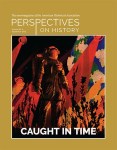
Cover of the September 2022 issue of Perspectives

This summer, James H. Sweet, the president of the American Historical Association, published an essay in the AHA’s magazine. It elicited weeks of indignation among some historians. At the end of October, The Atlantic’s David Frum wrote about the controversy. Frum described an American historical profession gripped by partisanship and chilled by political correctness. Now I’ve finally written my own analysis of the affair.

Today, in Clio and the Contemporary, I try to explain what happened, why it really happened, and why the whole thing was a missed opportunity. I hope you’ll take a look.

Week Links in Education: Nov. 26

Some of the stories and essays, particularly related to education in the United States, that caught my attention this week. A 🕛 symbol indicates a known metered paywall.


Graduate students around the world are losing faith in their career prospects.

A jury awarded 🕛 an Auburn University economist $646,000 after the university punished him for speaking publicly about foundation money and the football team.

Sierra Leone has dedicated nearly a quarter of its national budget to education. The president called it “an existential issue.”

Rhitu Chatterjee remembered a Thanksgiving twenty years ago when a student forgot her homesickness.

In a predominantly white community in North Jersey, a grownup called the police, “scared” by a Black fourth grader’s interest in science.

A team of researchers found that racial and ethnic disparities in advanced math and science skills emerge by kindergarten.

In Orlando, a teacher got a student loan bill for $955,000.

An 11-year-old boy who dreams of joining the University of Michigan marching band got a surprise.

Class at a Historic Site: Inside Hollybush

This Tuesday, on a freezing morning, with Thanksgiving on everyone’s minds, fifteen students joined me in Hollybush, a nineteenth-century mansion on the main campus of Rowan University.

As planned, we assembled there to talk about primary sources related to the Glassboro Summit of 1967, when President Lyndon Johnson and Soviet Premier Alexei Kosygin held two days of talks in Hollybush. Tina Doran, the operations coordinator in Rowan’s Office of University Events, had very graciously helped us reserve the building and had given me an advance tour.


Supervised by a portrait of the current Rowan president,

Ali Houshmand, in Hollybush

Before our field trip, my students prepared by exploring the Glassboro Summit Collection, a project of Rowan’s Digital Scholarship Center. The DSC coordinator, Michael T. Benson, had visited my class a few days earlier to help students understand the collection, and to explain the work of archivists and digital humanists more broadly. I gave students an assignment that involved browsing the collection and then selecting three primary sources (a photograph, an audio or video recording, and an artifact of another kind) to write about before they visited Hollybush in person.

On Tuesday, now that we were inside the house, I gave students permission to explore the first floor of the house on their own. Then I distributed worksheets for students to use—first in pairs and then in larger groups—as a basis for discussion.

The questions on these worksheets asked students to compare their expectations with the reality they found when they arrived on site; to evaluate the house itself as a primary source; to reflect on additional information they would like to have in order to understand the 1967 conference better; and ultimately to talk about how visiting Hollybush in person, in conjunction with examining primary sources, has affected their thinking about the larger Cold War.

The responses I heard to that last question, when we compared notes as a full class, suggest to me that this project did help students conceptualize the Cold War in new ways. Just as importantly, it brought home the larger fact that history is not some distant thing—that one’s own backyard can be the focus of world events.

Week Links in Education: Nov. 19

Some of the stories and essays, particularly related to education in the United States, that caught my attention this week. A 🕛 symbol indicates a known metered paywall.


The FBI thinks most of this year’s racist threats against HBCUs were the work of just one minor.

A court released the Salvadoran army colonel who organized the assassinations of eight people, mostly Jesuit priests, at José Simeón Cañas Central American University in 1989.

At St. Petersburg Polytechnical University in 2009, a tall man approached an economics student after class and introduced himself as a friend of the instructor. He wanted to propose a business arrangement.

Yale University is rich, but it’s a bad place 🕛 to be a student in a mental health crisis. (This article discusses self-harm, sexual assault, and suicide.)

The law schools at Yale and Harvard will no longer 🕛 participate in U.S. News rankings.

In Virginia, the state board of education “punted” its decision about a chaotic 🕛 proposed revision to the state’s standards for K-12 history.

In Pennsylvania, the state education department released new standards for antiracist training in teacher education programs.

In Florida, a federal judge issued a temporary injunction against “dystopian” provisions of the state’s educational gag law.

Scholars at the Gilder Lehrman Center discussed 🕛 the challenges and benefits of designing “pluralistic” U.S. history courses.

American colleges espousing environmentalism often run on relatively dirty campus power plants.

Britain’s new higher education minister affirmed that giving opportunities to disadvantaged students is a legitimate main purpose of the university system.

Researchers found that the overall well-being of the American K-12 teaching profession has been falling since 2010 after two decades of stability.

Eastern University, a Baptist institution, was suspended from the evangelical Council for Christian Colleges and Universities after deciding not to discriminate against LGBTQ employees.

Spice Trader’s Pumpkin Pie

Now for something completely different: My recipe for a fragrant autumnal squash tart.

Pumpkin pie cooling on a counter

Chill a 9″ pie crust.

In a small bowl, mix:

  • 2 tsp cinnamon
  • 2 tsp ginger
  • 1 tsp cardamom
  • ½ tsp cloves (ground)
  • ½ tsp salt
  • ¼ tsp nutmeg

Preheat your oven to 425°F.

Beat two large eggs in a large mixing bowl. Stir in one can (15 oz) of pumpkin purée and the spice mixture.

Thoroughly stir in one can (14 oz) of condensed milk and two tablespoons of sour cream. Then stir in one tablespoon of vanilla extract.

Pour the mixture into the chilled 9″ pie crust.

Bake the pie for 15 minutes at 425°F. Then reduce the heat to 350°F and bake for another 30-40 minutes or until the pie fully inflates (forming a dome with no depression in the center).


Turn the oven off, but leave it for 15 minutes with the door cracked open, so that the pie slowly deflates without cratering. Then remove the pie from the oven and let it cool for two more hours before refrigerating it. Chill the pie for at least 12 hours before serving.

This recipe produces a dense but silky pie with understated sweetness and a strong spice flavor.