A Conversation About Pedagogy

Today, Danny Anderson, who teaches English at Mount Aloysius College in central Pennsylvania, invited me onto his Sectarian Review podcast, a wide-ranging religious humanities program, to talk about an essay I wrote here last year, “The Conservatism of My Teaching: Seven Elements.”

Our conversation went in a lot of different directions and covered a number of controversial topics. I can only hope I treated the positions of all my colleagues fairly, given the constraints of the medium and my typical shortcomings as an extemporaneous speaker. We certainly didn’t exhaust any of the topics we discussed.

Later in the interview, I talked about two articles from the March 2022 issue of the Journal of American History: “Meet Me in the Classroom,” by Olga Koulisis, and “Historical Thinking and the Democratic Mind,” by Lindsay Stallones Marshall and John R. Gram. I tried to explain why I lean toward Koulisis’s position, but both of these essays are rewarding.
The Joy of Truth

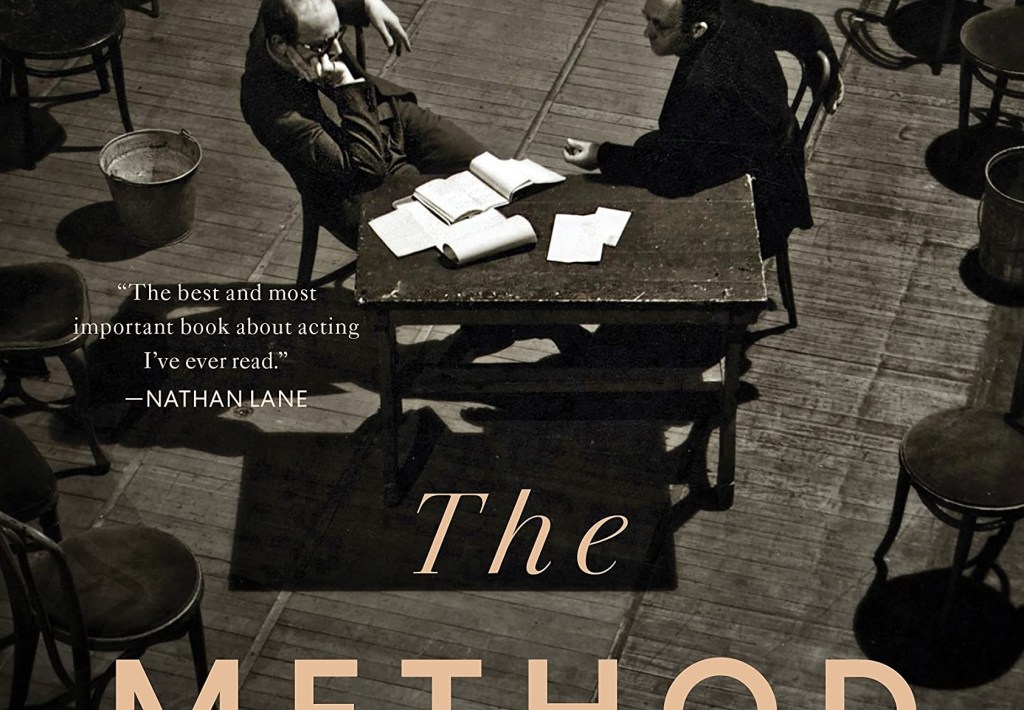
As the summer begins, I’ve been fighting off a predictable cycle of postseason depression by enjoying a great new book about a different vocation. The book is The Method: How the Twentieth Century Learned to Act, by the dramatist Isaac Butler (Bloomsbury, 2022). My public library was kind enough to order a copy and reserve it for me.

Why is this book doing so much to cheer me up? Because it’s about a multigenerational group of people who dedicated themselves to figuring out how to tell truer stories—how to develop more vivid, more authentic, and more meaningful experiences for audiences watching the stage and screen.

Continue reading “The Joy of Truth”

When Lies About CRT Spill Over

Yesterday, a young racist attacked a supermarket in Buffalo, New York, shooting thirteen people in a targeted attack on an African American community.

Ben Collins, a reporter covering domestic extremism and disinformation for NBC News, has published an assessment of the accused Buffalo terrorist’s manifesto. (As a matter of principle, I will not name the accused terrorist or directly address his manifesto here.) The attack is part of a string of white-power terror attacks around the world and in the United States since 2018. But it has a couple of specific elements worth noting. According to Collins, the attack appears to be related to high school education in at least two ways.

First, the accused terrorist, who is now eighteen years old, “claims that he was radicalized on 4chan”—a known breeding ground for Internet extremists, including the earliest participants in the QAnon hoax—“while he was ‘bored’ at the beginning of the coronavirus pandemic in early 2020.” Presumably, that would be the period when his high school was closed for in-person instruction.

Second, the accused terrorist “claims ‘critical race theory,’ a recent right-wing talking point that has come to generally encompass teaching about race in school, is part of a Jewish plot, and a reason to justify mass killings of Jews.”

Assuming the manifesto is authentic, as it appears to be, this is how paranoia and political lies spill over.

Xenophobia, treated as a useful tool and amusing plaything by cynical politicians and media personalities, finds new targets, over and over again. That’s its job. But people who know better will continue finding excuses for it.

The Myth of the Rashōmon Effect: A Film Misremembered

If you’ve spent much time thinking about narrative, or about truth-telling in general, you have probably encountered the word Rashōmon.

Cover of the Criterion Collection Blu-ray for the Akira Kurosawa film Rashomon.

The 1950 film by that name, directed by Kurosawa Akira, made a deep impression on American storytellers and critics. Not only has it been credited with “effectively opening the world of Japanese cinema to the West,” in the words of Roger Ebert. Its title also has given us an irreplaceable metaphor in English: the Rashōmon effect.”

Unfortunately, most Americans’ impression of this film is wrong. It contradicts both the details and the argument of Kurosawa’s movie. (Yes, I appreciate the irony.)

The movie definitely has an argument. The director said so. And the film itself isn’t exactly subtle about it. Of course, viewers should form their own opinions about any work of art, and anyone who tries to tell true stories—including a history teacher—may benefit from watching Kurosawa’s classic film for themselves. But if you do that, I recommend trying to experience it without the preconceptions that American popular culture has grafted onto it.

You may find, as I did, that this great work of art speaks to you in ways we have not been led to expect.

Continue reading “The Myth of the Rashōmon Effect: A Film Misremembered”

Space for Thinking, Space for Acting

Campuses are complicated spaces, because they aren’t just one kind of space: There’s the classroom, the dorm, the public space that is the campus. Then there’s what we could call clubs, support centers—identity based or based on social categories or political interests. It’s a terrible mistake to confuse all of these and imagine that the classroom or the public space of the campus is the same as your home. …

Academic freedom needs to be appreciated as a collective right of the faculty to be free of interference in determining what we research and teach. We’re accountable to our disciplines, our peers. We can’t just do anything and have it called quality scholarship or teaching. But the idea of academic freedom is that we are free of external interference. Free speech is different. It’s an individual right for the civic and public sphere. It’s not about research and teaching. It’s not even about the classroom. It’s what you can say in public without infringement by others or the state. ….

[I]f we just focus on this generation’s political style—and we have to remember youth style always aggravates the elders—we ignore their rage at the world they’ve inherited, and their desperation for a more livable and just one, and their critique of our complacency. That is part of what is going on in the streets and on our campuses. But that remains different from educating that rage and helping young people learn not just the deep histories but even the contemporary practices that will make them more powerful thinkers and actors in this world. If they’re right about our complacency, what we still have to offer is knowledge and instruction and some space in a classroom to think.

Wendy Brown, interviewed in “Why Critics of Angry Woke College Kids Are Missing the Point,” New York Times Magazine, May 1, 2022