
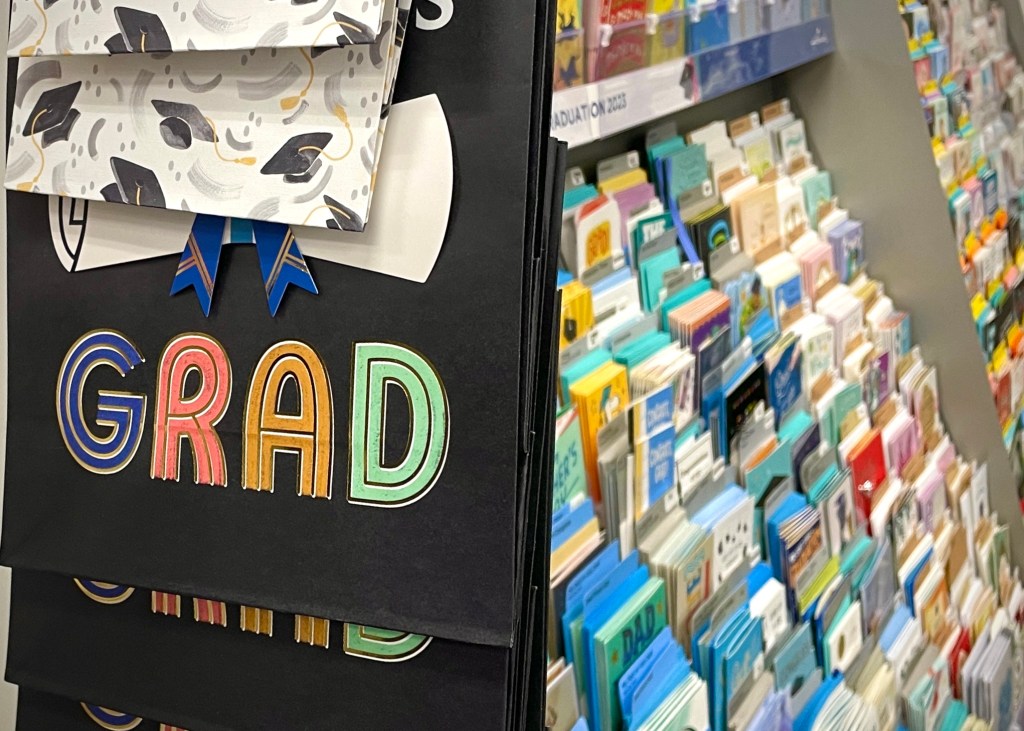
As I write this, we’re wrapping up graduation season in the United States. Almost four million young Americans are finishing high school. Many are preparing to enroll in colleges and universities this fall. So are many Americans who finished high school in earlier years. If you’re one of them, you may be wondering what to expect when you get to college. Or maybe you’re reading this early in your first year of college, and you’re still trying to figure out what’s going on.
Whatever situation you’re in, here’s my advice about how to think about your new role as an undergraduate student.
First, let’s discuss …
What College Isn’t
Overall, you should avoid two common mistakes. One mistake is to assume that college is just more school—that you’re about to start thirteenth grade. The other is to assume that the only purpose of college is to train for a specific career. Either of these misunderstandings will keep you from getting your money’s worth.
College Isn’t Just More School
Since the 1930s, when finishing high school became the norm, U.S. society has assumed that a twelfth-grade education should provide most of the basic skills and knowledge an adult might need to be a good citizen and community member. Roughly speaking, the modern high school curriculum is our answer to the question “What do we want everyone to know before they start voting and before they start forming their own households?”
In other words, in an important sense, your education is supposed to be complete when you graduate from high school. (That’s the theory, anyway.) After twelfth grade, nobody—not the state and not your family—can force you to keep going with your education, even if they can apply a lot of pressure.
So what is college for? Well, it’s definitely true that college should build on the basic knowledge provided by high school—broaden and deepen and strengthen it. But that doesn’t mean college is just more of the same kind of schooling. When you start working toward a college degree, you’re starting a new kind of project.
Specifically, if high school is meant to prepare you to be a good citizen, college is meant to prepare you to be a good social leader. This is why, for example, a bachelor’s degree is one of the requirements to become a commissioned U.S. military officer. And preparing for true leadership, grounded in the ability to think for yourself in a responsible way, can involve different kinds of learning.
For related reasons, you also need to remember that …
College Isn’t Just Career Training
Yes, the single most urgent reason most people go to college is that they want a good career. And there’s absolutely nothing wrong with that.
But once you’re enrolled, if you approach college only as a way to get the credentials for a career, you could miss out on a lot of the personal growth college is designed for. Not only that, you may shortchange yourself on career preparation, too.
See, here’s the uncomfortable thing about college and careers: college-educated people change jobs, and even move into entirely different industries, all the time. It’s not just common; it’s typical.
Sometimes people change careers because they want to, but often they have no choice. Either way, the landscape of work is constantly evolving. Attractive jobs exist today that didn’t exist at all when I started teaching college a decade ago. And some jobs that my students wanted then are getting very hard to find now.
Think about it. As a new college student, how are you supposed to predict in 2023 exactly what career options will be available to you in 2027, let alone 2037 or 2047 or 2057? And how are your professors supposed to know what specific skills and knowledge you’ll need for the career options that will exist then?
Obviously, it would be impractical to get a new four-year degree every time you wanted to change jobs. So no, your time in college shouldn’t just prepare you for a career. It should prepare you for many careers, including careers you currently aren’t planning to have.
That means college needs to make you a certain kind of person, not just a specific type of worker.
What College Should Be
College is many things at once. It’s full of variety, paradoxes, and even contradictions—and that can be a good thing. There’s no single right way to think about what a college or university offers. But I’m confident that many of your professors would agree with what I’m about to write.
For example, many of your professors (and many recent college graduates, too) would tell you that …
College Should Teach You to Teach Yourself
Let’s be clear: College is hard. But it isn’t always difficult the way new students expect. In fact, many new college students are shocked by how easy it seems to be … at first.
When you arrive at college, you’ll notice right away that your classes meet every other day, not every day, and that you aren’t expected to be on campus during specific hours. Most of the time, nobody’s watching over you. And for reasons that are too complex to unpack here, some professors in first-year courses—not all, but some—actually believe it should be easy for you to make a high grade as long as you do all the work they assign.
Meanwhile, unlike in high school, federal law normally forbids professors from speaking with your parents about how you’re doing in class. Even if you haven’t turned 18 yet, being in college means you’re a theoretically independent adult with a legal right to privacy and self-determination.
This freedom immediately gets a lot of new college students in trouble.
Very often, you’ll arrive on campus having been warned about how hard college will be, only to discover that you suddenly seem to have an enormous amount of free time, and many of your teachers seem very easygoing, and nobody’s hassling you about your homework.
What may not be obvious for a while is that this time is “free” because most of your schoolwork is actually supposed to happen outside of class, under your own direction.
In college, unlike high school, homework and independent studying are supposed to be two thirds or more of your average week. You are responsible for arranging all your own time to make sure you can complete that work. And those easygoing professors are easygoing because—unlike many high school teachers—they won’t get in any trouble if you fail. (That doesn’t mean they want you to fail. They just believe in giving you the option.)
In college, if you don’t take effective charge of your time—if you just let your assigned reading and writing and other daily work pile up, or if you struggle through incomprehensible course material without ever asking for help—nobody’s likely to save you from that choice. Within just a few weeks, you can fall hopelessly behind in your courses even if you attend every class. And most professors will just let it happen.
Why does college work this way?
For one thing, you may need to work long hours to support yourself. You probably have other important responsibilities, too—including, perhaps, raising children of your own. You’re a full adult, in other words. Thus, on average, you’re likely to need a lot more flexibility than you needed in high school.
But college also works this way because there’s actually no other way to put you in charge of your own learning as an adult. Professors and staff members can, and usually will, offer a lot of help staying on track if you ask. (Please ask! They actually want you to.) But it’s usually up to you to initiate that conversation.
Just as you could never learn to run your own household by being micromanaged by your parents, you’ll also never learn to run your own intellectual life by being micromanaged by your teachers.
So what are professors for? Well, for one thing …
College Should Teach You How New Knowledge Is Made
Fundamentally, your college teachers are all (at least theoretically) scholars who conduct original research in their fields. While they instruct you, they’re also advancing the total knowledge and understanding in our society. And their scholarship is supposed to inform their teaching.
The exact expectations for this depend on the kind of college or university you attend. At research-focused universities, professors are expected to maintain active “research programs”—publishing academic articles or books throughout their careers. At these schools, full-time professors may be hired entirely for their ability to do research rather than for their teaching skills. But even at community colleges, small liberal arts colleges, and other schools that make teaching their main focus, professors are normally expected to hold graduate degrees (master’s degrees and doctorates) that they got by producing significant original research. (And even at these “teaching colleges,” professors are sometimes, though not always, expected to keep publishing new research throughout their careers.)
This is fundamental to what “higher” education (beyond high school) is. College gives you access to emerging knowledge, not just knowledge that’s already widely held. And it gives you at least a basic training in research skills yourself, so you can think like a scholar too—and so that you have the skills to independently assess the validity of other people’s claims.
That’s the most important reason we ask college students to pick specific “majors” (i.e., major fields of study). The fundamental purpose of a college major isn’t necessarily to prepare for a career working in that exact field. It’s to learn how knowledge in a specific discipline works. Because you can’t study everything equally, you pick a discipline to focus on.
Today, this is widely misunderstood. One reason is that we’ve gradually allowed a huge list of specific majors to grow, based on all the different kinds of jobs people can hold. You can major in sports marketing, for example, or homeland security management, or game design, or youth services administration—and many people go to college assuming that they need to major in these fields in order to compete for those specific jobs.
Now, I’m not saying you shouldn’t major in, e.g., human-computer interaction or hospitality management. As far as I’m concerned, any well-organized program of study is a good thing. And it’s true that certain majors will increase your earning potential more than others. Just remember, people change careers a lot. And a college education should be able to open lots of professional doors, not just one.
A list of successful history majors from the past isn’t just a list of historians or history teachers; it’s a list of entertainers, novelists, attorneys who became politicians, and corporate CEOs. Similarly, a list of famous psychology majors is a list of actors, comedians, and business leaders, not just psychologists. If we return to the example of U.S. military officers, students at West Point can major in economics, English, sociology, or philosophy, not just “practical” military fields. That’s because the fundamental point of a college major is to teach you how to understand the world a certain way, not just to train you in narrow occupational skills.
Basically, this is another way of saying …
College Should Produce Educated People
This probably seems painfully obvious, but bear with me. I think it’s often overlooked.
The finished “product” of your college education isn’t your diploma or your résumé. It’s you.
Specifically, it’s a version of you that’s different from the version that existed before. Your diploma merely certifies (theoretically) that this change has occurred. Or at least that you had the opportunity for it to occur.
So to make the most of your time in college, you should take advantage of the opportunity to explore all the different kinds of things it can mean to be an educated person—all the different ways you can grow.
You may never again have the opportunity to engage in such intense directed study. You may never again have so much access to a group of experts who can show you how knowledge is produced across many different domains. And you may never again have the opportunity to share experiences like this with a large group of fellow learners.
But remember, that’s up to you. At the college level, you’re the only person who can make your education happen.
 Blue Book Diaries
Thank you so much for this lovely and thoughtful piece. I have tried for many years to convince my colleagues that asking students to reflect on the “you” who is experiencing college at the end of each year would be a wonderful way for them to think about and see the ways they are changing. Having them start by reading this would be fantastic.
LikeLiked by 1 person
Thank you for the kind words! That’s really good to hear.
LikeLike